
Why RISH
qRT- PCR can not preserve the cellular relationship and tissue structure making RNA ISH a perfect complement to create a full RNA expression profile.
Currently immunohistochemistry (IHC) and RNA ISH are two commonly used technologies to detect biomarkers on tissue sections at the cellular with morphological information.
- RISH provides morphological information at tissue and cellular level.
- RISH does not produce false positive results caused by contamination in PCR
- RISH is more sensitive: RISH can detect a single positive cell in a tissue section to avoid the need of laser micro dissection for PCR
- RISH is less expensive: the development of an antibody for IHC costs much more than a RISH probe.
- RISH provides better specificity: the specificity of a probe is better than that of an antibody and is much easier to validate.
Why RNA In Situ Hybridization (RISH)?
RNA in situ hybridization (RISH) is a vital tool for the detection of RNA targets in FFPE clinical samples, offering unique advantages over other detection technologies:
- Tissue and Cellular Context: Unlike qRT-PCR, which cannot preserve tissue structure or cellular relationships, RISH provides valuable morphological information.
- High Sensitivity: RISH can detect single positive cells within a tissue section, eliminating the need for laser capture microdissection required for PCR.
- Cost-Effectiveness: Developing antibodies for immunohistochemistry (IHC) is significantly more expensive than creating RISH probes.
- Better Specificity: RISH probes are more specific and easier to validate compared to antibodies used in IHC.
- No False Positives: RISH avoids contamination issues often seen with PCR.

Our Technology
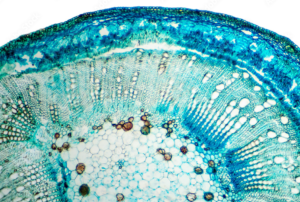
Although RISH has been around for over 40 years, most of the current RISH protocols produce high back ground signals due to poor probe design and improper hybridization and washing conditions. These protocols usually use long probes (over 100nt) and relatively low temperature (20oC below annealing temperature) for hybridization and washing. Long probes can be easily trapped on the cell matrix and at low washing temperature non–specifically bound probes cannot be completely removed after washing, resulting in a RISH image with high background signals. We have established a probe design algorism that uses only 15-20 nt target-specific sequence for probe synthesis to eliminate non-specific probe hybridization. For each probe highest hybridization and washing temperature will be tested to avoid non-specific binding of the probe and eliminate background signal. This accurate RNA in situ hybridization (RNAFinder™) technology developed by InCeltu produces the most accurate RNA detection image with no cross binding of probe and generates very low background signal. (picture 2) . Using RNAFinder™, for the first time, we are able to precisely determine the location of any RNA targets at cellular level.
About RNAFinder™ Technology
Although RISH has existed for decades, many existing protocols fail due to high background signals caused by poor probe design and suboptimal hybridization conditions. At InCeltu, we’ve revolutionized RNA in situ detection with RNAFinder™, our proprietary, high-precision technology
Key Features of RNAFinder™:
- High Specificity: Our proprietary probe design algorithm uses short (15–20 nt) and highly unique target sequences, avoiding cross-hybridization.
- Low Background: High-temperature hybridization and washing eliminate non-specific probe binding, ensuring clean, accurate images.
- Unmatched Sensitivity: A unique signal amplification system enhances RNA detection, enabling clear visualization of RNA molecules at cellular resolution.
- Precise Localization: RNAFinder™ pinpoints RNA targets with unparalleled accuracy at the cellular level.
Why RNAFinder™
High Specificity: our probe design algorism only uses highly unique target sequence for probe synthesis to avoid cross hybridization.
Low Background: we use the highest temperature possible for hybridization and washing to eliminate non-specific annealing of probe.
High Sensitivity: Our unique signal amplification system yields highly sensitive RNA detection signal.
Cellular Localization: InCeltu’s RNAFinder™ can precisely locate the position of the target RNA at cellular level.
How RNAFinder™ Works:
Traditional RISH methods often use long probes (>100 nt) and low temperatures during hybridization and washing, leading to non-specific probe binding and high background noise. Our advanced design uses optimized probe lengths and high-temperature protocols to ensure the cleanest, most specific results.
With RNAFinder™, researchers can, for the first time, locate and measure RNA targets with unprecedented precision and reliability.

Why Choose InCeltu?
- Innovative Technology: Our RNAFinder™ platform is the most advanced RISH solution available, ensuring high-quality RNA detection.
- Comprehensive Services: We cater to researchers in academia, government, pharma, and biotech, offering tailored solutions to meet your needs.
- Unparalleled Expertise: Our team brings years of expertise in RNA detection and biomarker discovery.
InCeltu, LLC
13, Taft Ct.
Suite 231
Rockville, MD 20850
Tel: 240-406-9368